
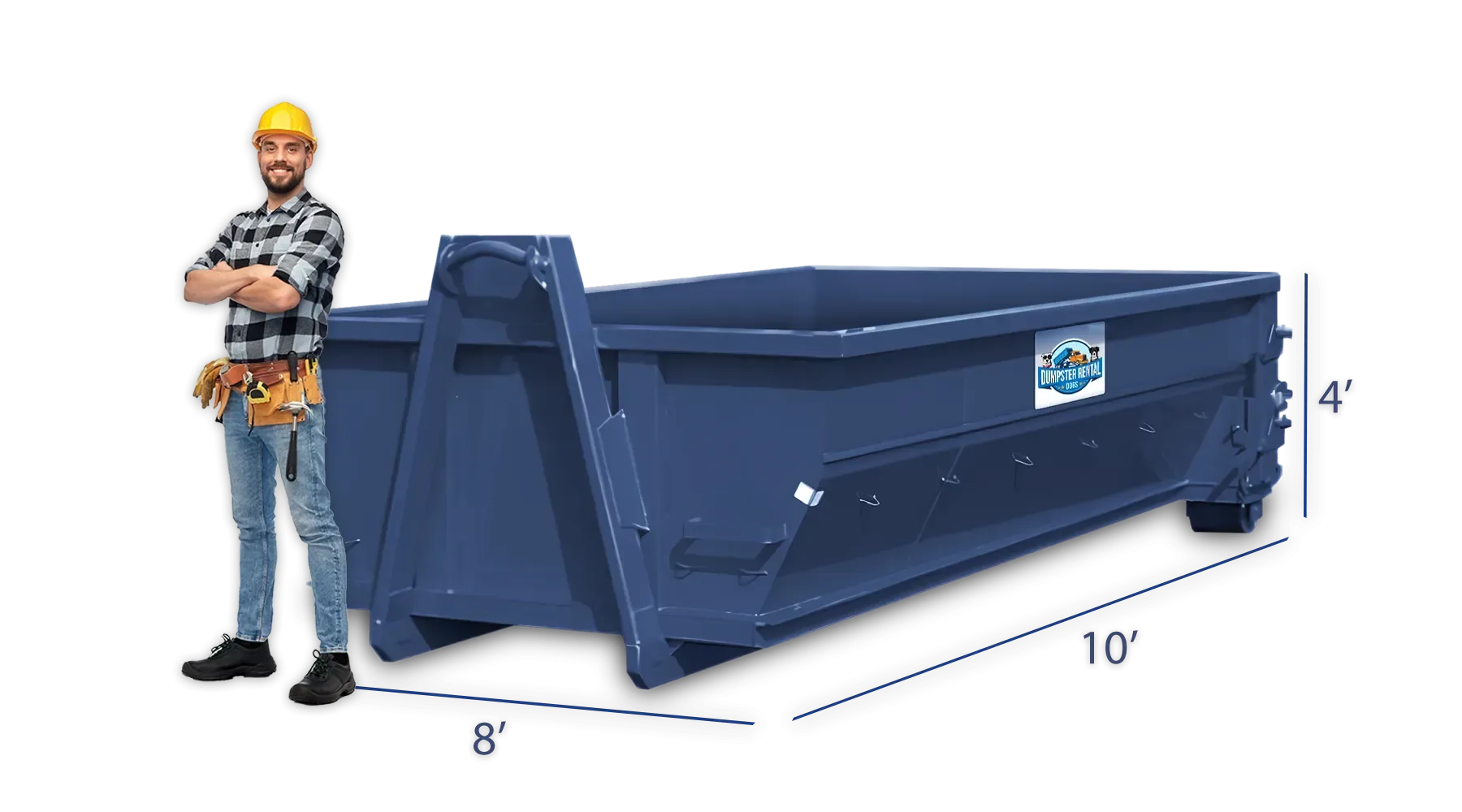
10 yard
The 10 yard covers small Atlanta cleanouts and the occasional heavy load of concrete or dirt, with about 2 tons usually included.

Atlanta leans on construction debris for us, with the 30 yard ordered most and deliveries running well past the city into Marietta, Decatur and Alpharetta.
From $540* for a 30 yard
*Prices vary with delivery address, container size, debris type, rental length, weight allowance and site access. Ranges shown are typical. Your written quote lists every line item before you approve it.
Quote in 30 seconds · open to 7pm
Pricing
Atlanta prices below cover general debris around the metro, with plenty of local history behind the 10, 20 and 30 yard. The From price is quoted for a 30 yard, the size most Atlanta customers order.
| Size | Typical* | Tons included | Orders priced, 12 mo |
|---|---|---|---|
| 10 yard | $400 to $445* | 2 tons | 29 |
| 20 yard | $450 to $525* | 3 tons | 78 |
| 30 yard | $540 to $595* | 4 tons | 75 |
| 40 yard | $700 to $950* |
*Prices vary with delivery address, container size, debris type, rental length, weight allowance and site access. Ranges shown are typical. Your written quote lists every line item before you approve it.
The From price is for a 30 yard. Other sizes are in the table.
An Atlanta 30 yard usually includes about 4 tons, and rentals usually include 14 days before an extra-day charge.
An extra day costs about $10 on a 30 yard*, while extra tons run about $90 on a 30 yard, so tonnage is the number to watch.
Atlanta delivery fees usually sit near $75 on a 30 yard order and can reach $100 on a 30 yard job, shown on a separate line.
Sizes
Atlanta runs on the 30 yard, the 20 yard is a solid second, and the 10 yard covers small cleanouts and the occasional heavy load.
The 10 yard covers small Atlanta cleanouts and the occasional heavy load of concrete or dirt, with about 2 tons usually included.
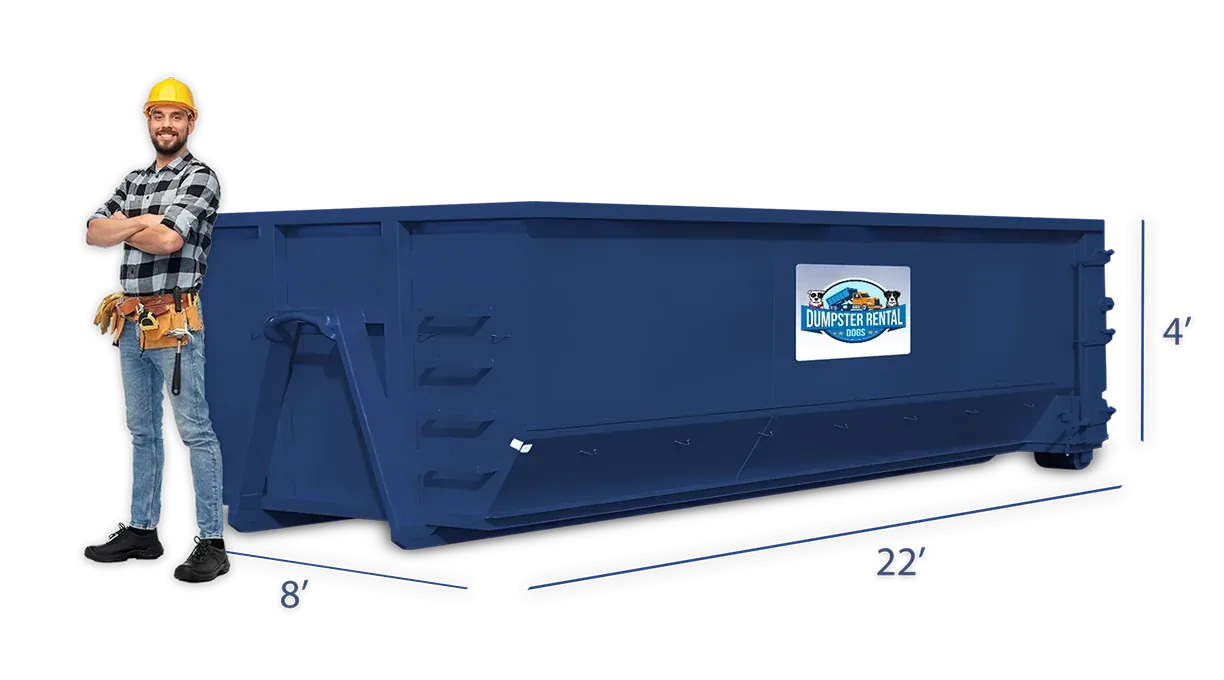
The 20 yard is Atlanta's second choice and has carried recent roofing tear-offs, with about 3 tons usually included.
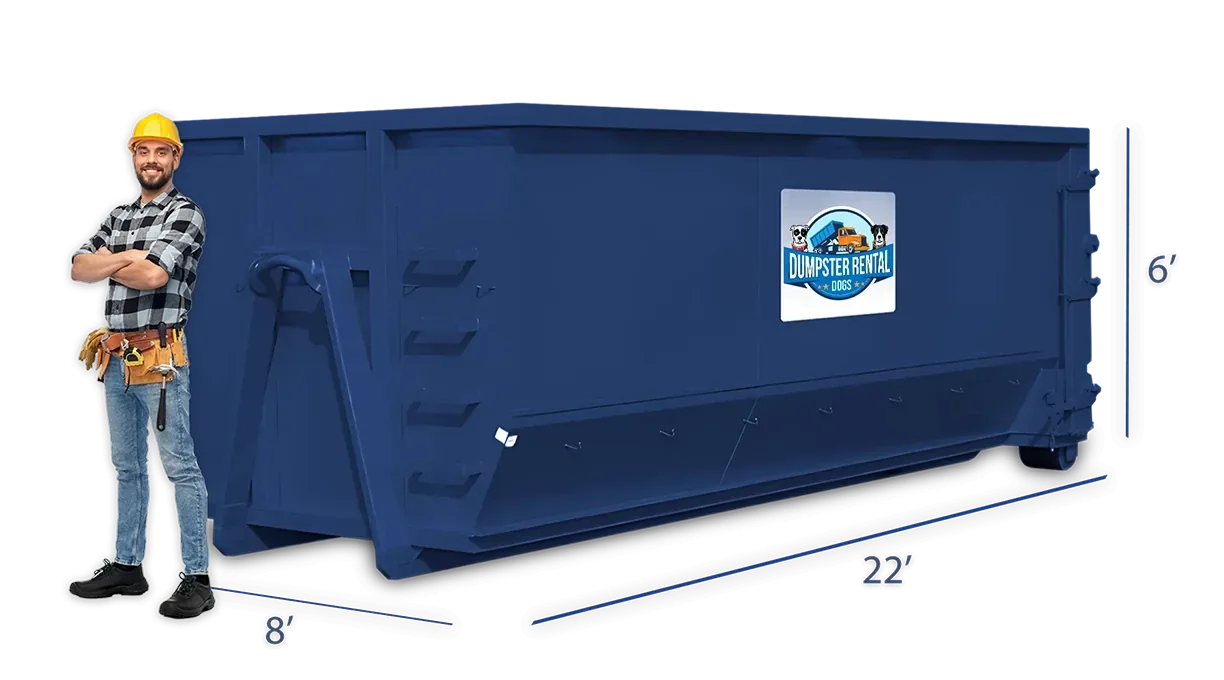
The 30 yard is the Atlanta standard for demolition and large renovations, including recent jobs in Atlanta and Lawrenceville, with about 4 tons usually included.
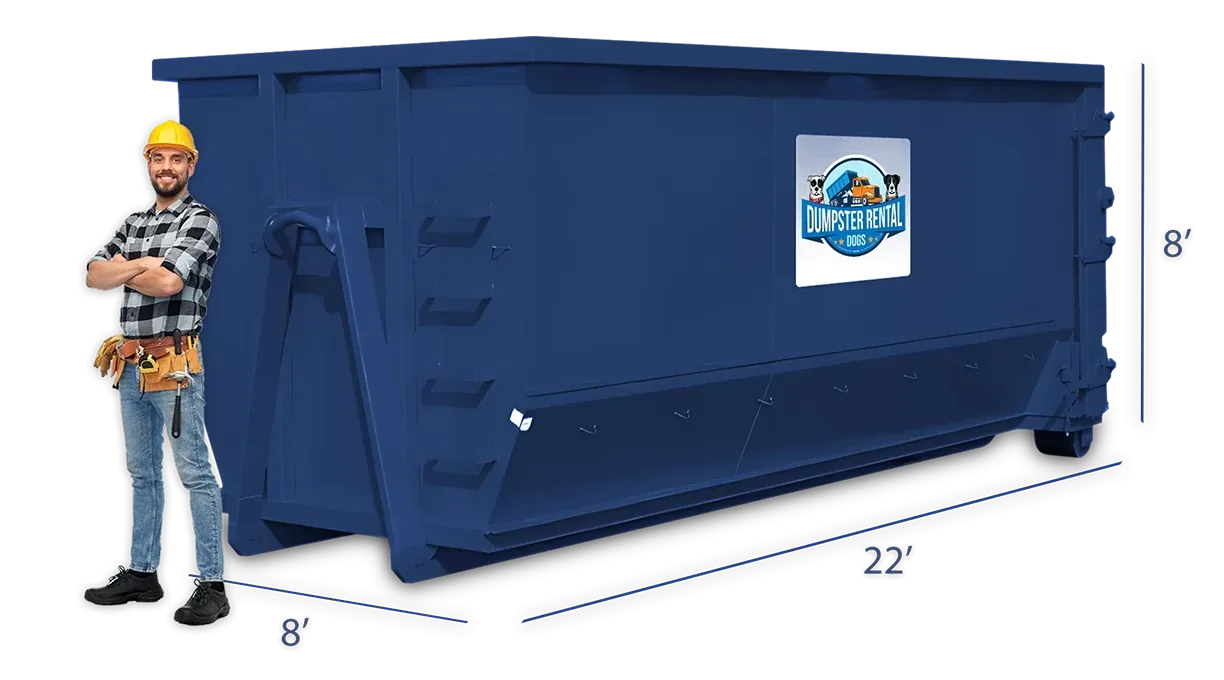
The 40 yard is rarely needed in Atlanta and is kept for the largest clearouts, so its range here is the site-wide one.
Recent work
Construction and demolition debris made up most Atlanta jobs, 142 orders against 28 household cleanouts and 6 heavy loads of concrete, dirt or similar material.
Source: Dumpster Rental Dogs orders by delivery date. Job type comes from the debris material on the order. Customer names withheld.
Weight and disposal
Georgia bans scrap tires from landfills, and state rules also bar lead acid batteries, liquid waste and hazardous waste from every disposal facility, whatever size container you rent.
| Topic | Rule |
|---|---|
| Scrap tires | Scrap tires are banned from entering Georgia's landfills. Georgia EPD publishes a guide to tire recycling options and a calendar of local tire collection events. Source |
| Prohibited at every Georgia disposal facility | Georgia's solid waste rules specifically prohibit lead acid batteries, liquid waste in landfills, regulated quantities of hazardous waste, radioactive waste and PCB waste from disposal at solid waste disposal facilities. Source |
| What counts as construction and demolition waste | State rules define construction and demolition waste as waste building materials and rubble from construction, remodeling, repair and demolition, including wood, brick, metal, concrete and wall board. A construction landfill may also receive inert waste and yard trimmings. Source |
Georgia keeps scrap tires, lead acid batteries, liquid waste and hazardous waste out of landfills, and we ask you to check with us before loading any of them.
Permits and rules
The Atlanta Department of Transportation takes dumpster placement applications through its online WorksApp portal, with permits handled Monday to Friday and not on weekends or holidays.
| When | What you need | Lead time | Who to call |
|---|---|---|---|
| A dumpster, container or POD placed on the city's public right-of-way | A Dumpster/POD Placement permit from the Atlanta Department of Transportation (ATLDOT), applied for online through the WorksApp portal. The application needs the location, a sketch showing barricades and reflectors, a Certificate of Liability Insurance naming the City of Atlanta as certificate holder ($1,000,000 general liability and $2,000,000 aggregate), a notarized affidavit and a copy of valid ID. The dumpster provider completes a Certification Compliance Agreement and supplies reflectors, and the applicant supplies barricades and cones. ATLDOT's June 2024 fee schedule lists a $20.00 fixed fee plus $10.00 to $25.00 per calendar day, depending on the length of lane or space used. Source 1 Source 2 Source 3 Source 4 | Permits are not processed on weekends or holidays. ATLDOT's hours are Monday to Friday, 8:15 am to 5:00 pm | Atlanta Department of Transportation, Atlanta City Hall, 55 Trinity Avenue SW. Permit questions: 404-330-6501 or ATLDOTPermits@atlantaga.gov |
ATLDOT's fee schedule is dated June 2024, so confirm the amounts when you apply. A container kept entirely on private property is not part of the right-of-way permit.
Weather and season
35.6°F
January lows at Hartsfield-Jackson average 35.6°F, and about 36 nights a year reach freezing. The usual last freeze falls around March 15, so ground rarely stays hard into spring.
90.1°F
July highs average 90.1°F, and about 47 days a year reach 90°F or hotter, which favors an early start on any tear-out or roofing job.
4.75 in
July is Atlanta's wettest month at 4.75 inches, and summer downpours add weight to an open load. Keep a tarp handy for loose debris.
July
February, July and August tied as our busiest months in Atlanta, with September and January right behind, so steady demand runs most of the year.
March
March and November were our lightest months in Atlanta, which makes them the easiest weeks to get the delivery day you want.
Scheduling
Atlanta orders move fast, with about half leaving within a day and most of the rest inside three days.
When an Atlanta 30 yard fills, we swap it or haul it off on request, and that service appears as a separate line* on your quote.
Facing a tight Atlanta deadline? Call (678) 904-2144 and ask about the next open truck near your zip code.
Delivery area
Atlanta addresses get the most deliveries, with Marietta and Decatur next, then Alpharetta, Douglasville, Roswell and Duluth, and a few drops each in Stone Mountain and Fairburn.
Placement
ATLDOT requires a right-of-way permit for every dumpster that touches an Atlanta street, with a sketch of the barricades and reflectors and insurance that names the city as certificate holder.
An Atlanta driveway or lot that stays fully on private property sits outside the ATLDOT right-of-way permit, so there is no street paperwork.
An Atlanta container that touches the street needs an ATLDOT placement permit before delivery, with barricades and cones from the applicant and reflectors from the provider. See permits
FAQs
These Atlanta answers draw on our last 12 months of orders, ATLDOT's dumpster permit pages and Georgia's solid waste rules.
About half of Atlanta deliveries go out within a day, and about three in four arrive within three days.
A driveway is the simple choice. Any Atlanta container that touches the street or public right-of-way needs an ATLDOT dumpster placement permit, and the city's checklist spells out the paperwork.
For the street, yes. ATLDOT issues a Dumpster/POD Placement permit online, with a site sketch, notarized affidavit, ID and insurance, and the daily charge depends on how much space the box uses.
Atlanta rentals usually include 14 days, and a typical job leaves after about six. Three in four are gone within 11 days.
An Atlanta 10 yard usually includes about 2 tons, a 20 yard about 3 tons and a 30 yard about 4 tons. Extra weight is billed by the ton.
Georgia bans scrap tires from landfills, and state rules also bar lead acid batteries, liquids and hazardous waste. Ask us before loading any of them.
An extra ton on an Atlanta 30 yard costs about $90, while a day past the 14 included adds only about $10 on a 30 yard. Net 30 and extended terms are available for qualified contractor and business accounts.
Call or request a haul-off once the Atlanta box is full. Typical jobs wrap up in about six days, well inside the 14 included.


