
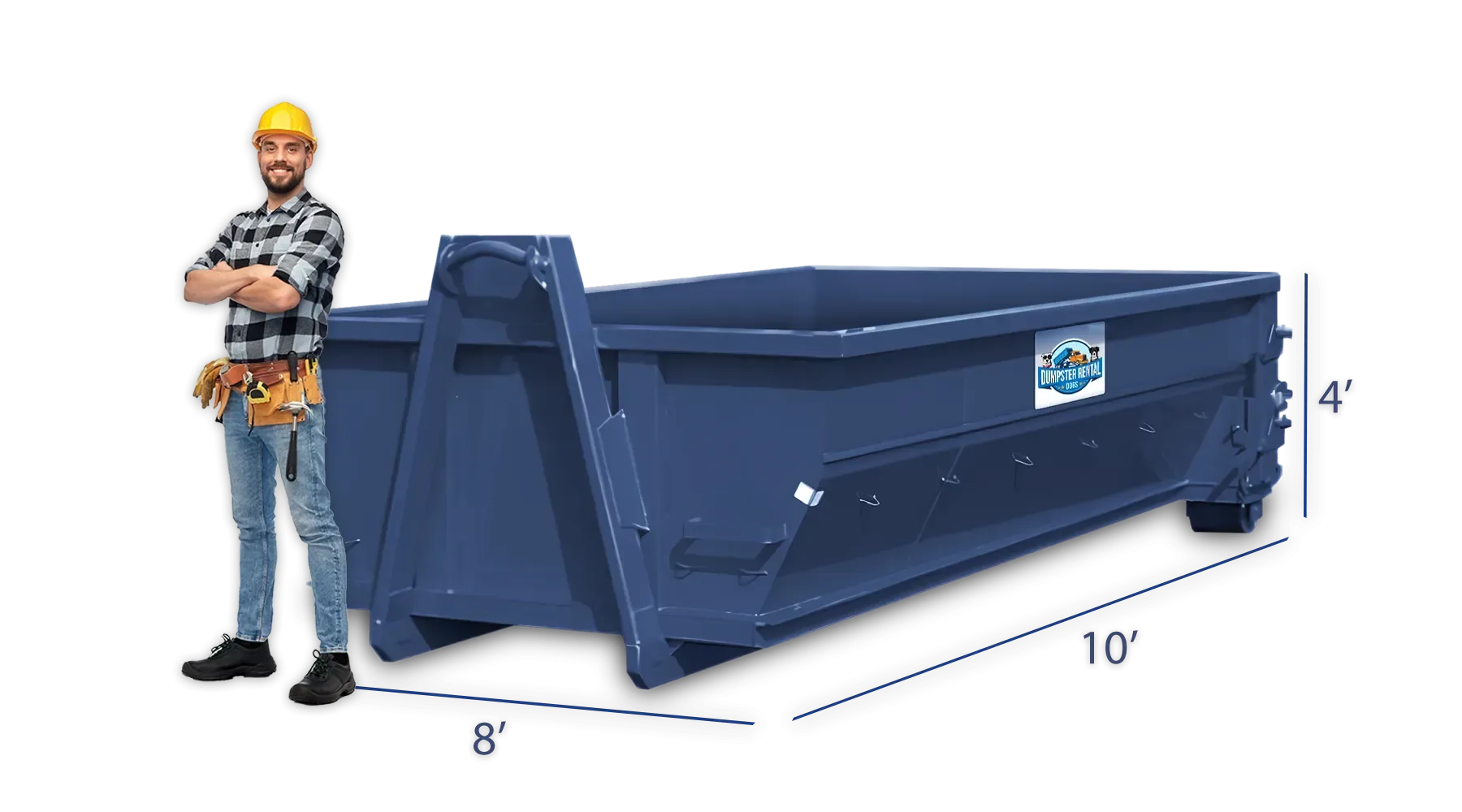
10 yard
The 10 yard suits small Chicago remodels and tight sites, and it carried a recent job in Highland, Indiana, with about 2 tons usually included.

Chicago jobs are mostly construction debris in a 30 yard, and the city's alley, curb lane and parkway rules put the street permit in the dumpster company's hands, not yours.
From $590* for a 30 yard
*Prices vary with delivery address, container size, debris type, rental length, weight allowance and site access. Ranges shown are typical. Your written quote lists every line item before you approve it.
Quote in 30 seconds · open to 7pm
Pricing
Chicago prices below cover general debris around the metro, where the 30 yard leads and the 20 yard and 10 yard follow. The From price is quoted for a 30 yard.
| Size | Typical* | Tons included | Orders priced, 12 mo |
|---|---|---|---|
| 10 yard | $485 to $560* | 2 tons | 7 |
| 20 yard | $550 to $665* | 3 tons | 12 |
| 30 yard | $590 to $695* | 3 tons | 41 |
| 40 yard | $700 to $950* |
*Prices vary with delivery address, container size, debris type, rental length, weight allowance and site access. Ranges shown are typical. Your written quote lists every line item before you approve it.
The From price is for a 30 yard. Other sizes are in the table.
Chicago 30 yard rentals usually come with about 3 tons and 7 days before an extra-day charge applies.
Extra days cost about $20 on a 30 yard*, and extra tons run about $99 on a 30 yard, so a short rental keeps costs down.
Chicago delivery fees usually sit near $120 on a 30 yard order and can reach $200 on a 30 yard job, shown on their own line.
Sizes
Chicago leans on the 30 yard, with the 20 yard and 10 yard handling smaller remodels and cleanouts.
The 10 yard suits small Chicago remodels and tight sites, and it carried a recent job in Highland, Indiana, with about 2 tons usually included.
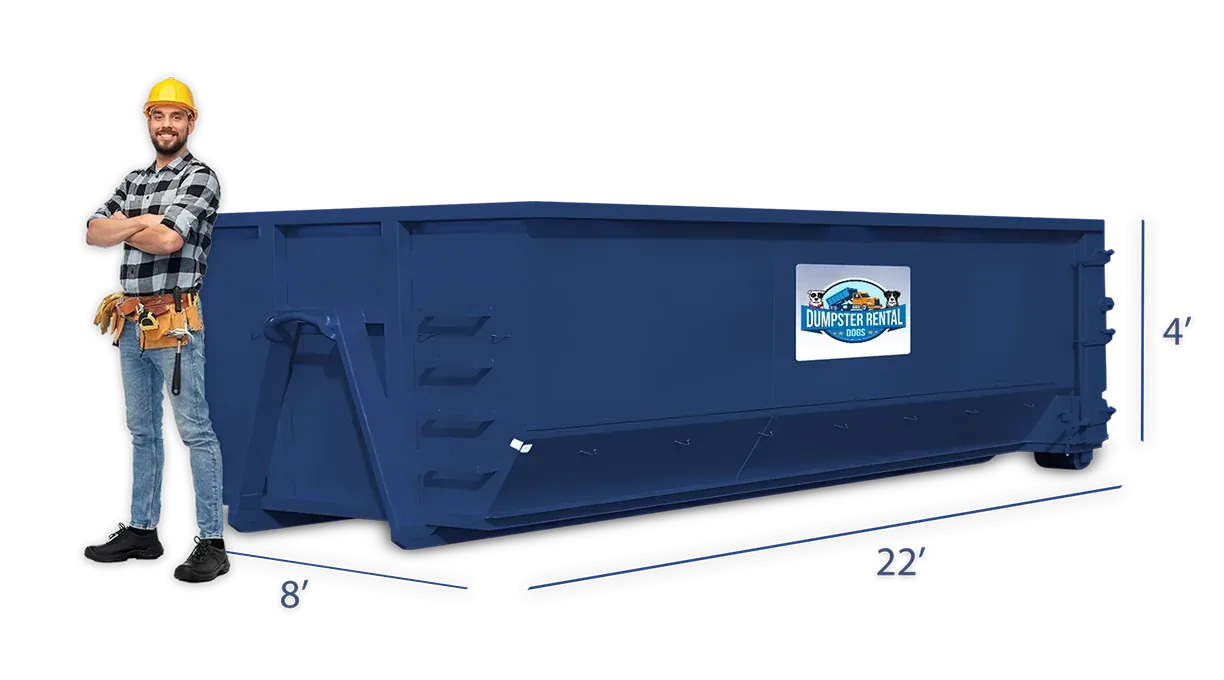
The 20 yard handles local household cleanouts, including a recent one in Bolingbrook, and about 3 tons are usually included.
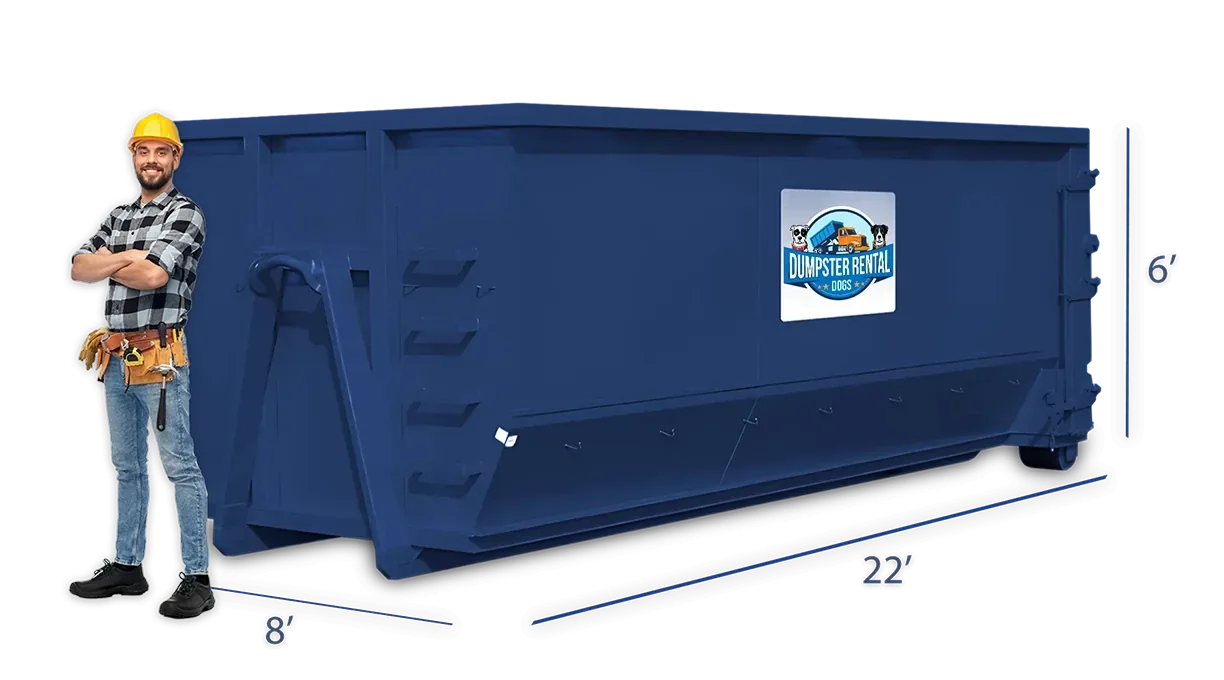
The 30 yard is the Chicago standard for gut rehabs and demolition debris, with about 3 tons usually included, and it stays within the city's smaller Class A permit.
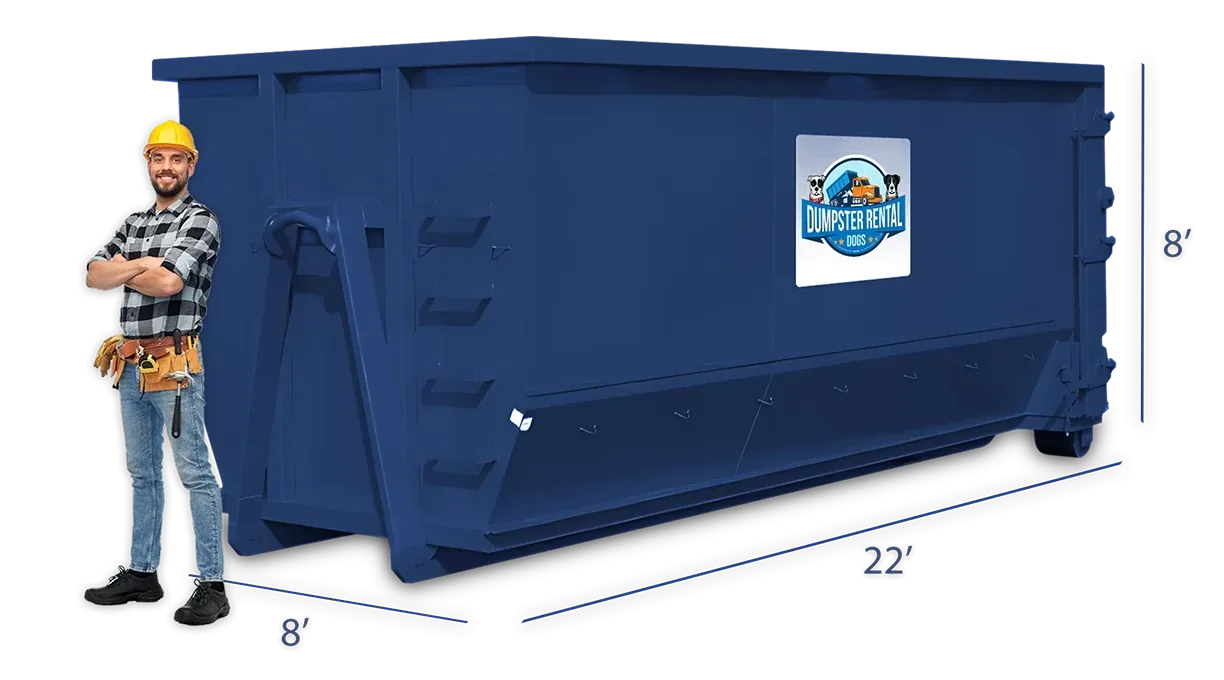
A 40 yard counts as Class B on a Chicago street, which carries a higher permit fee, so it fits only the largest jobs.
Recent work
Construction and demolition debris made up most Chicago jobs, 54 orders against 6 household cleanouts and 3 heavy loads of concrete, dirt or asphalt.
Source: Dumpster Rental Dogs orders by delivery date. Job type comes from the debris material on the order. Customer names withheld.
Weight and disposal
Chicago contractors on covered projects must recycle or reuse at least half of their debris by weight, and Illinois bans landscape waste, tires and lead-acid batteries from landfills.
| Topic | Rule |
|---|---|
| Recycling rule for covered construction and demolition projects | Under Chicago's Construction and Demolition Site Waste Recycling Ordinance, the contractor on a covered project must recycle or reuse at least 50 percent of the debris by weight, track what the site produces, and file a compliance form with an affidavit from the hauler or recycler. Covered projects include new residential buildings with four or more units and new non-residential buildings over 4,000 square feet. Source 1 Source 2 |
| What the city counts as construction and demolition debris | Chicago lists bricks, concrete and rock, wood including painted and treated wood, scrap metal, plaster and drywall, plumbing fixtures and piping, non-asbestos insulation, roofing shingles, reclaimed asphalt, glass, plastics and landscape waste. Materials contaminated with lead, asbestos or other hazardous materials are outside the recycling rule. Source 1 Source 2 |
| Items Illinois bans from landfills | Illinois has banned lead-acid motor vehicle batteries from landfills since September 1, 1990, landscape waste since July 1, 1990, and used tires since July 1, 1994. Covered electronic devices such as televisions, computers and monitors are banned from landfills as of January 1, 2026. Source 1 Source 2 |
Illinois keeps landscape waste, tires, lead-acid batteries and covered electronics out of landfills, so ask us before loading any of them.
Permits and rules
The Chicago Department of Transportation issues dumpster permits to the provider in two classes, split at 30 cubic yards, and charges by class, location and length of stay.
| When | What you need | Lead time | Who to call |
|---|---|---|---|
| A dumpster in the public way: an alley, curb lane, parkway or sidewalk | A CDOT Dumpster permit, obtained by the dumpster provider and applied for online through the City permit portal. No CDOT dumpster permit is needed when the dumpster sits entirely on private property, though other permits may apply. Class A covers containers of 30 cubic yards or less and Class B covers larger ones. The 2026 usage fee for Class A outside the central business district is $50.00 for 1 to 3 days or $100.00 per month, and $100.00 or $200.00 inside it. For Class B it is $100.00 or $200.00 outside the central business district and $200.00 or $400.00 inside it. The same amounts apply to alley, curb lane, parkway and sidewalk placements. Source 1 Source 2 Source 3 | Chicago Department of Transportation (CDOT) permit office, CDOTPermitsupport@cityofchicago.org | |
| Any permitted dumpster sitting in the public way | The provider's name and telephone number must be painted or permanently affixed on each dumpster in letters at least three inches high, placed so city staff can read them from the public way. Source | Chicago Department of Transportation (CDOT), enforced through the dumpster permit |
Chicago's dumpster permit belongs to the provider, so you do not file it yourself. The usage fees are set by CDOT's yearly fee schedule and can change, so check the current schedule.
Weather and season
18.8°F
January lows at O'Hare average 18.8°F, with about 121 nights a year at freezing. The usual last freeze lands near April 16, so frozen ground is part of a long Chicago winter.
84.5°F
July highs average 84.5°F, and about 17 days a year reach 90°F or hotter, so heat is a short-lived factor for a Chicago cleanout.
4.49 in
Chicago sees its heaviest rain in May, 4.49 inches on average. Rain adds weight to roofing and demolition debris, and a hard driveway beats soft turf for a heavy box.
July
July and October tied as our busiest months in Chicago, so book a few days ahead if your job lands in either one.
December
December was our quietest month in Chicago, with September next, so those are the easiest months to get your preferred delivery date.
Scheduling
Chicago drops usually take about two days, and about four in ten leave within a day of the order.
Once a Chicago 30 yard is full, the swap or haul-off is billed as a separate line* on your quote, outside the 7 included days.
Short on time in Chicago? Call (312) 212-3142 and ask when the next truck can reach your block.
Delivery area
Most deliveries land at Chicago addresses, with some in Bolingbrook, East Chicago, Indiana and Northbrook, a few in Skokie, and the occasional drop in Dolton, Wheeling and River Grove.
Placement
In Chicago the dumpster company, not the customer, applies for the CDOT permit, and an alley, curb lane, parkway or sidewalk placement is priced by class, location and duration.
A Chicago driveway or lot entirely on private property needs no CDOT dumpster permit, though other city permits may still apply to the work itself.
A Chicago alley, curb lane, parkway or sidewalk placement needs a CDOT dumpster permit, which the provider files online, so tell us the exact address and spot early. See permits
FAQs
These Chicago answers draw on our last 12 months of orders, CDOT's dumpster permit materials and the city's construction recycling rules.
Chicago drops usually go out in about two days, and about four in ten leave within a day. The slower end runs to about five days.
A driveway or private lot skips the city permit. A Chicago alley, curb lane, parkway or sidewalk needs a CDOT dumpster permit, which the dumpster company applies for online.
CDOT issues the dumpster permit to the provider, as Class A for containers up to 30 cubic yards and Class B above that. Fees depend on class, placement, duration and whether the site is in the central business district.
Chicago rentals usually include 7 days, and finished jobs typically leave after about four, with the longer ones closer to a week.
Expect about 2 tons in a Chicago 10 yard and about 3 tons in a 20 yard or 30 yard, with extra weight billed by the ton.
Illinois bans landscape waste, tires and lead-acid batteries from landfills, and covered electronics are banned too. Ask us before loading anything on that list.
Chicago 30 yard overage runs about $99 a ton, and a late day on a 30 yard runs about $20. Net 30 and extended terms are available for qualified contractor and business accounts.
When the Chicago box is full, ask for a haul-off. Most jobs finish in about four days, well inside the 7 included.


