
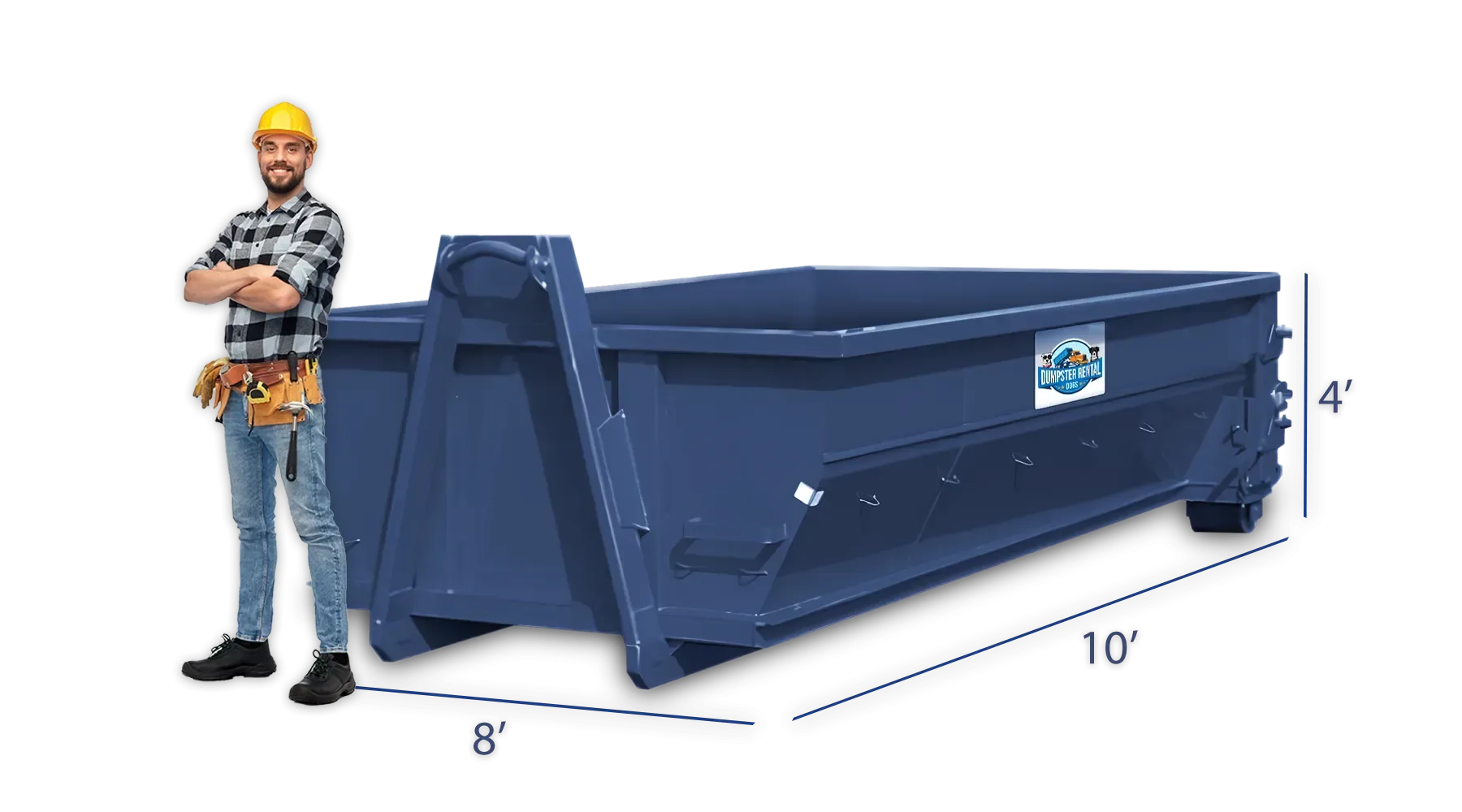
10 yard
A 10 yard covers a Milwaukee basement or garage cleanout and usually includes about 2 tons, with the long 30-day window that comes with most rentals here.

Milwaukee winters set the rules for a dumpster here: the city bars street and alley placement from December 1 through March 1, and a typical rental includes 30 days.
From $670* for a 30 yard
*Prices vary with delivery address, container size, debris type, rental length, weight allowance and site access. Ranges shown are typical. Your written quote lists every line item before you approve it.
Quote in 30 seconds · open to 7pm
Pricing
Everything priced here for Milwaukee assumes general debris, not heavy inert loads. The From price is a Wisconsin-wide starting price for a 30 yard, not a Milwaukee-only figure, and the other sizes show ranges from all our jobs.
| Size | Typical* |
|---|---|
| 10 yard | $440 to $585* |
| 20 yard | $525 to $695* |
| 30 yard | $670 to $825* |
*Prices vary with delivery address, container size, debris type, rental length, weight allowance and site access. Ranges shown are typical. Your written quote lists every line item before you approve it.
The From price is for a 30 yard. Other sizes are in the table.
A Milwaukee rental typically includes 30 days, plus about 2 tons on a 10 yard and about 4 tons on a 20 yard or 30 yard.
Past the allowance, a ton on a 30 yard runs about $80*, and a day on a 30 yard runs about $10.
Milwaukee delivery varies by address, so the written quote shows any delivery charge as its own line, apart from the container rate.
Sizes
Milwaukee sizes run from the 10 yard to the 30 yard, and each card shows the weight that usually comes with it.
A 10 yard covers a Milwaukee basement or garage cleanout and usually includes about 2 tons, with the long 30-day window that comes with most rentals here.
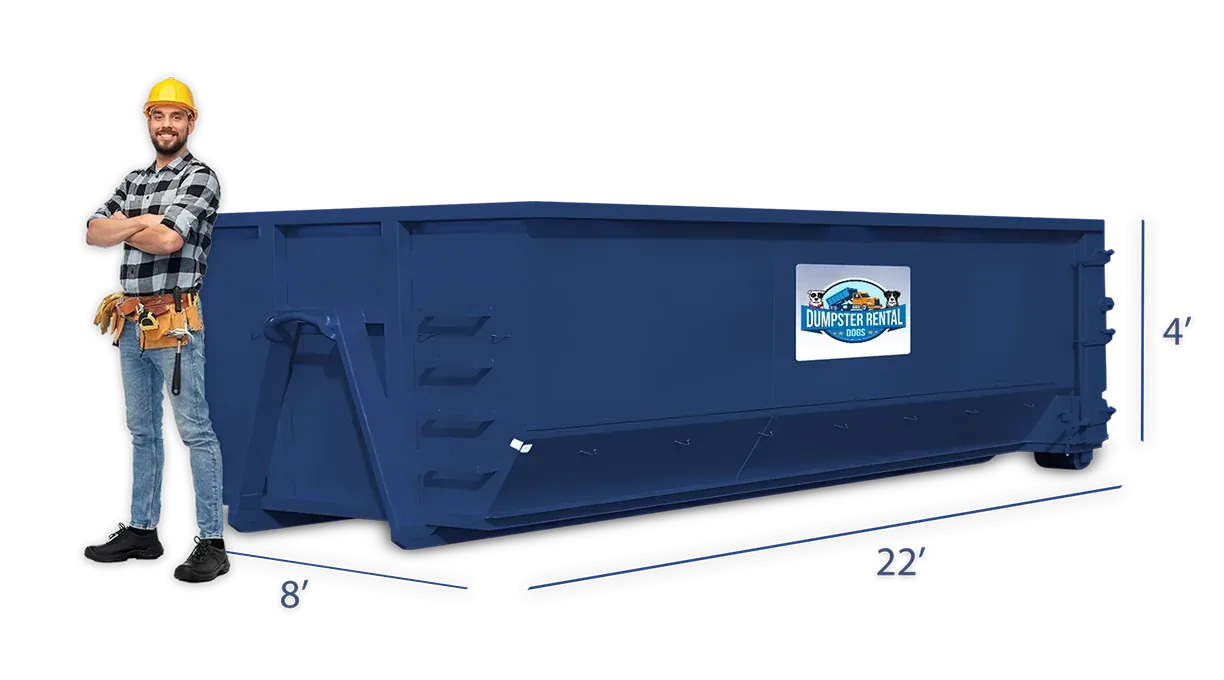
A Milwaukee remodel or roof tear-off fits the 20 yard, which typically includes about 4 tons, the same allowance that comes with the 30 yard.
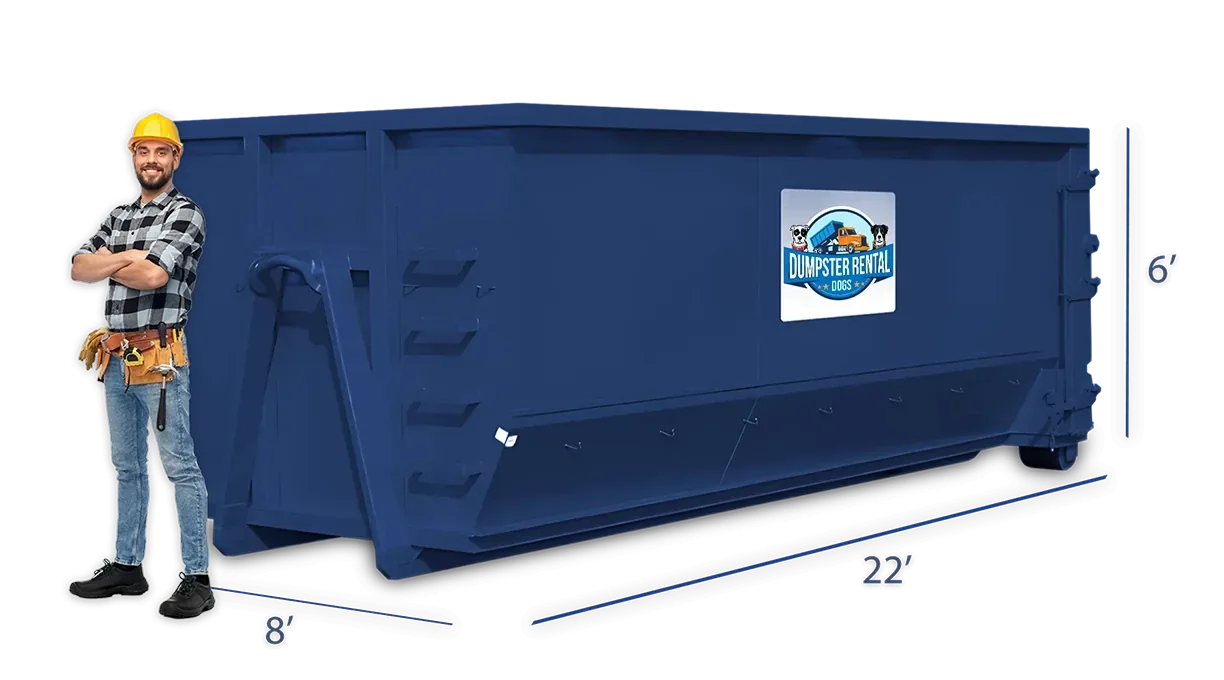
The 30 yard anchors the Milwaukee From price and typically includes about 4 tons, with extra weight billed by the ton past that.
Recent work
Milwaukee-area jobs reach well past the city line, from West Allis to Racine and out to Waukesha, and they range from a small 15 yard cleanout to long construction rentals.
Source: Dumpster Rental Dogs orders by delivery date. Job type comes from the debris material on the order. Customer names withheld.
Weight and disposal
Wisconsin law keeps lead acid batteries, major appliances, waste oil, yard waste and tires out of landfills, and the DNR points demolition waste to landfills built to handle it.
| Topic | Rule |
|---|---|
| Items Wisconsin bars from landfills | State law bars lead acid batteries, major appliances, waste oil, yard waste and waste tires from solid waste disposal facilities. Yard waste includes grass, leaves and brush under six inches. No one may put a waste tire in a container whose contents go to a landfill. Source 1 Source 2 |
| Construction and demolition debris | Wisconsin DNR treats construction and demolition debris as solid waste. The disposal location for brick, broken pavement, building stone, clean soil, concrete, reinforced concrete and unpainted or untreated wood is exempt from solid waste code. Other waste from a demolished structure goes to a landfill designed to handle it. Source 1 Source 2 |
| Hazardous materials in demolition | Before demolition, DNR says to find and remove hazardous materials such as asbestos insulation, mercury switches and thermostats, CFC-containing refrigerators and air conditioners, and household chemicals. A landfill may ask for a Notification of Demolition and Renovation, which is required for nonresidential structures and residential buildings with more than four units. Source |
Wisconsin bars lead acid batteries, major appliances, waste oil, yard waste and tires from landfills, and the DNR flags asbestos, mercury items and CFC appliances for removal before demolition.
Permits and rules
Milwaukee's Permit and Development Center, at 809 N. Broadway, handles the public-way permit that a street, sidewalk or alley dumpster needs.
| When | What you need | Lead time | Who to call |
|---|---|---|---|
| A dumpster placed in the public way (street, sidewalk or alley) for a short time | A public-way permit under Milwaukee Code s. 115-10. Section 115-11.5 makes the business placing the dumpster responsible for getting it. The city's Dumpsters in the Public Way sheet says the fee depends on how long the dumpster stays and how much space it takes, and bars dumpsters from streets and alleys open to traffic from December 1 through March 1. Source 1 Source 2 | Permit and Development Center, 809 N. Broadway, 1st Floor, (414) 286-8210 |
Milwaukee's rules cover a dumpster in the public way. The pages we checked do not cover a container kept on private property.
Weather and season
17.2°F
Milwaukee's January low averages 17.2°F, with about 123 freezing nights a year and a typical last freeze near April 19. Winter is when street placement is off the table.
81.9°F
July highs average 81.9°F, and only about 9 days a year reach 90°F or hotter, so summer heat is a mild factor for a Milwaukee crew.
4.38 in
Milwaukee sees the most rain in June, with a normal of 4.38 inches. Wet debris weighs more, and soft lawn edges rut under a truck, so a driveway pad is the safer spot.
Scheduling
Order to Milwaukee drop-off usually runs about a day and a half, but a spot in the public way needs its permit first.
When a Milwaukee 30 yard fills, the haul-off appears as a separate line* on the quote.
A day and a half is typical for Milwaukee. If you need the box sooner, call (414) 260-8252 and ask what is open.
Delivery area
We deliver in Milwaukee and a ring of suburbs, from Cedarburg, Mequon and Port Washington to the north to Oak Creek, Racine and Union Grove in the south.
Placement
Milwaukee requires a public-way permit for a dumpster in a street, sidewalk or alley, and none may sit on a street or alley open to traffic from December 1 through March 1.
Milwaukee's permit rules are written for the public way. The pages we checked say nothing about a container kept on a driveway or private lot.
A Milwaukee street, sidewalk or alley needs a public-way permit, and the winter ban runs December 1 through March 1. See permits
FAQs
These answers use typical values from our recent Milwaukee orders along with the city permit pages and Wisconsin DNR rules linked above.
Milwaukee deliveries typically arrive within about a day and a half of the order, which makes short-notice cleanouts workable.
A driveway is the simplest spot. A street, sidewalk or alley needs a public-way permit, and streets and alleys open to traffic are off limits from December 1 through March 1.
Yes for the public way. The permit under code section 115-10 comes through the Permit and Development Center at 809 N. Broadway, and the fee depends on time and space occupied.
Milwaukee rentals typically include 30 days, and finished jobs commonly hold the box about a week, so the usual job ends well inside the allowance.
A Milwaukee 10 yard typically includes about 2 tons, while a 20 yard and a 30 yard each include about 4.
Wisconsin bars lead acid batteries, major appliances, waste oil, yard waste and tires from landfills, and asbestos and CFC appliances need special handling before demolition.
A Milwaukee 30 yard typically adds about $80 for each ton past the allowance. Each day past the included 30 on that 30 yard runs about $10. Net 30 and extended terms are available for qualified contractor and business accounts.
When the Milwaukee box is full, call to schedule a haul-off or swap. Finished jobs commonly leave after about a week.


