
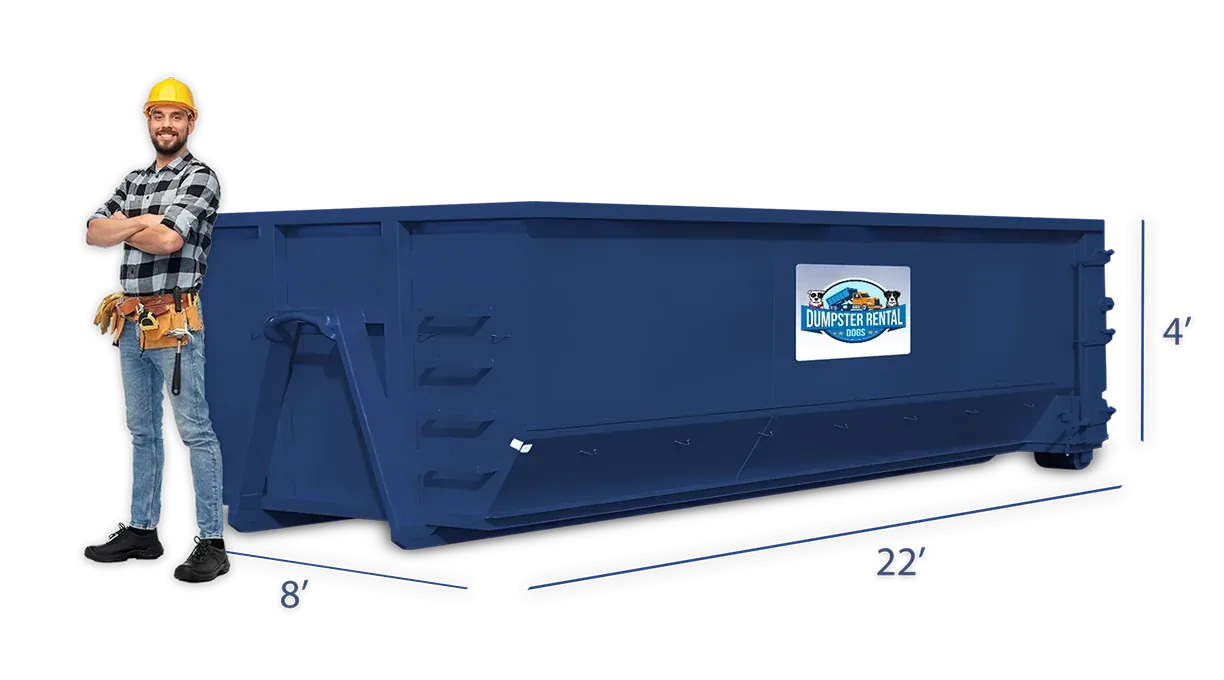
20 yard
Richmond remodels and mid-size cleanouts fit the 20 yard, which typically includes about 2 tons, the same small allowance as the Midlothian cleanout below.

Richmond crews lean on the 30 yard, with the 40 yard a regular choice for bigger jobs and a typical rental that includes 14 days.
From $475* for a 30 yard
*Prices vary with delivery address, container size, debris type, rental length, weight allowance and site access. Ranges shown are typical. Your written quote lists every line item before you approve it.
Quote in 30 seconds · open to 7pm
Pricing
Richmond ranges below reflect general debris. The 30 yard is the most common size and carries our From price, with the 20 yard next, while the 40 yard range comes from all our jobs.
| Size | Typical* | Tons included | Orders priced, 12 mo |
|---|---|---|---|
| 20 yard | $465 to $525* | 2 tons | 12 |
| 30 yard | $475 to $580* | 4 tons | 26 |
| 40 yard | $700 to $950* |
*Prices vary with delivery address, container size, debris type, rental length, weight allowance and site access. Ranges shown are typical. Your written quote lists every line item before you approve it.
The From price is for a 30 yard. Other sizes are in the table.
A Richmond rental typically includes 14 days, with about 2 tons on a 20 yard and about 4 tons on a 30 yard.
On a Richmond 30 yard, extra weight runs about $75 a ton*, and each extra day runs about $20 on a 30 yard.
In Richmond, delivery typically adds about $70 beside the 30 yard rate, and the written quote shows it as its own line.
Sizes
Richmond leans on the 30 yard, with the 20 yard beside it and the 40 yard held for jobs that outgrow both.
Richmond remodels and mid-size cleanouts fit the 20 yard, which typically includes about 2 tons, the same small allowance as the Midlothian cleanout below.
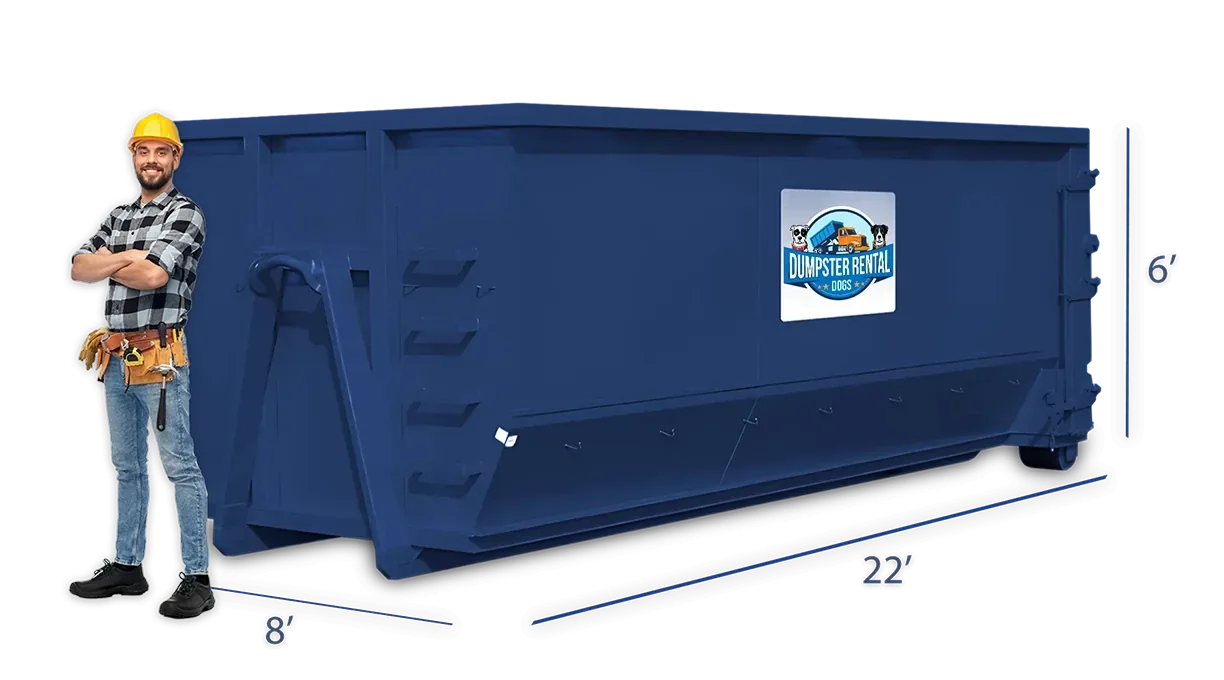
The 30 yard leads in Richmond and typically includes about 4 tons, which suits the larger construction jobs behind most of our work here.
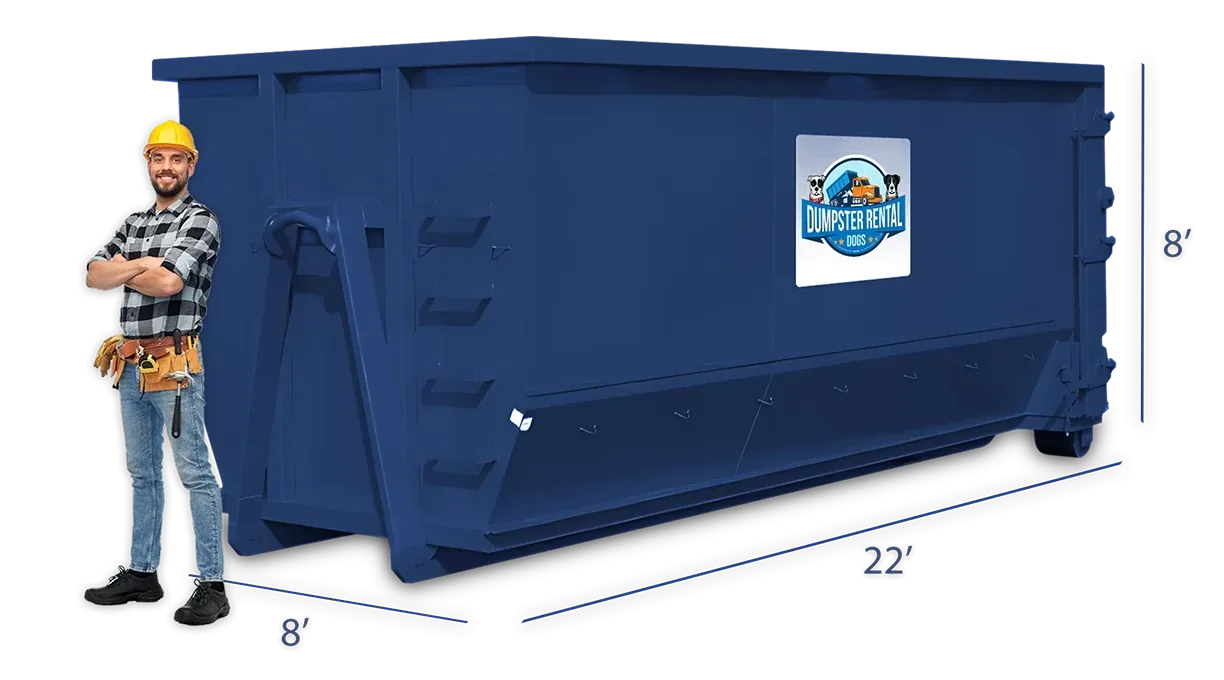
The 40 yard shows up in Richmond when a job outgrows the 30 yard, mostly on bigger construction clearouts, and its range here comes from all our jobs.
Recent work
Construction debris leads Richmond work, with household cleanouts a distant second, and the summer push shows in June, our busiest month here.
Source: Dumpster Rental Dogs orders by delivery date. Job type comes from the debris material on the order. Customer names withheld.
Weight and disposal
Virginia lets a construction and demolition landfill take only building, demolition and land-clearing debris, split tires and white goods, so paint, solvents, asbestos and liquids need another route.
| Topic | Rule |
|---|---|
| What a Virginia construction and demolition landfill accepts | Virginia's solid waste regulations let a construction, demolition and debris landfill take only demolition waste, construction waste, debris waste, land-clearing debris, split tires and white goods. Paints, coatings, solvents, asbestos, liquids, compressed gases and garbage are not construction waste. Source 1 Source 2 |
| Hazardous waste and whole tires | Hazardous waste may not go to a solid waste disposal facility unless the permit or the DEQ director specifically allows it. The Central Virginia Waste Management Authority's plan says whole tires are not allowed in landfills under the Virginia waste regulations. Source 1 Source 2 |
Richmond loads cannot carry paints, coatings, solvents, asbestos, liquids, compressed gases, garbage, hazardous waste or whole tires if they are bound for a construction landfill.
Permits and rules
Richmond's Right of Way Management Division at 900 E. Broad St. issues the Work in Streets Permit that a street or alley dumpster needs.
| When | What you need | Lead time | Who to call |
|---|---|---|---|
| A dumpster in the street, sidewalk or alley | A Work in Streets Permit (WISP). Public Works lists dumpsters among the work that needs it. The application takes a site plan and, when traffic is affected, a maintenance of traffic plan. A contractor applying also gives a certificate of insurance and license information. Closing a metered parking space also takes a parking permit from the Parking Division. Source 1 Source 2 | Right of Way Management Division, 900 E. Broad St., (804) 646-0436, Rightofway@richmondgov.com | |
| A dumpster in your own yard | Zoning allows trash dumpsters in a yard temporarily for up to 15 consecutive days, and longer while you are repairing the property. Past 15 days it must meet yard setback rules and may need a Certificate of Zoning Compliance. Source | City of Richmond Zoning Administration |
Richmond's Public Works page points to a fee schedule for the Work in Streets Permit. Zoning enforces private property, and the police or Public Works enforce the street and alley.
Weather and season
28.8°F
Richmond's mild winter shows in a January low of 28.8°F, and only about 74 nights a year dip to freezing. Freezes typically wrap up by April 3 and resume near November 4.
89.5°F
July highs average 89.5°F, and about 45 days a year reach 90°F or hotter, so Richmond summers favor an early start on loading.
4.90 in
August is Richmond's wettest month at 4.90 inches, with June and September not far behind. Wet debris weighs more, so a hard surface beats a lawn.
June
June is Richmond's busiest month, with November next and spring close behind.
January
January was the quietest month in Richmond, and October and March also stayed light.
Scheduling
From order to Richmond drop-off usually takes about two days, though some stretch toward five, so give notice when the date matters.
When a Richmond 30 yard is full, the haul-off comes as a separate line* and does not cut into the included 14 days.
Two days is the usual Richmond wait. If your crew needs it sooner, call (804) 655-6508 and ask what the schedule can do.
Delivery area
Most deliveries land in Richmond itself, with some in Glen Allen and a few in Midlothian and Ashland, plus the occasional drop out toward New Kent and Charles City.
Placement
Richmond requires a Work in Streets Permit from Public Works for a dumpster in the street, sidewalk or alley, while zoning lets a yard dumpster stay up to 15 consecutive days.
Richmond zoning allows a dumpster in your own yard for up to 15 consecutive days, and longer while you repair the property.
A Richmond street, sidewalk or alley takes a Work in Streets Permit from Public Works, and a lost metered space adds a parking permit. See permits
FAQs
These answers draw on our last 12 months of Richmond orders, the Public Works and zoning pages, and the Virginia rules linked above.
Richmond deliveries usually take about two days, and some stretch toward five, so confirm the date when you order for a job with a hard start.
A yard or driveway avoids street permitting, and zoning allows a dumpster there for up to 15 consecutive days, longer during repairs. The street, sidewalk or alley needs a Work in Streets Permit.
For the public way, yes. Public Works issues a Work in Streets Permit, which asks for a site plan and, if traffic is affected, a maintenance of traffic plan.
Richmond rentals typically include 14 days, and finished jobs usually hold the box about a week, though a few run past two weeks.
A Richmond 20 yard typically includes about 2 tons, while a 30 yard includes about 4.
Virginia's rules for construction landfills exclude paints, coatings, solvents, asbestos, liquids, compressed gases and garbage, and whole tires are not allowed in landfills.
A Richmond 30 yard typically adds about $75 per extra ton, and a day past the included 14 on that 30 yard runs about $20. Delivery typically adds about $70 beside the 30 yard rate. Net 30 and extended terms are available for qualified contractor and business accounts.
Call for a haul-off when the Richmond box fills. Finished jobs typically leave after about a week.


