
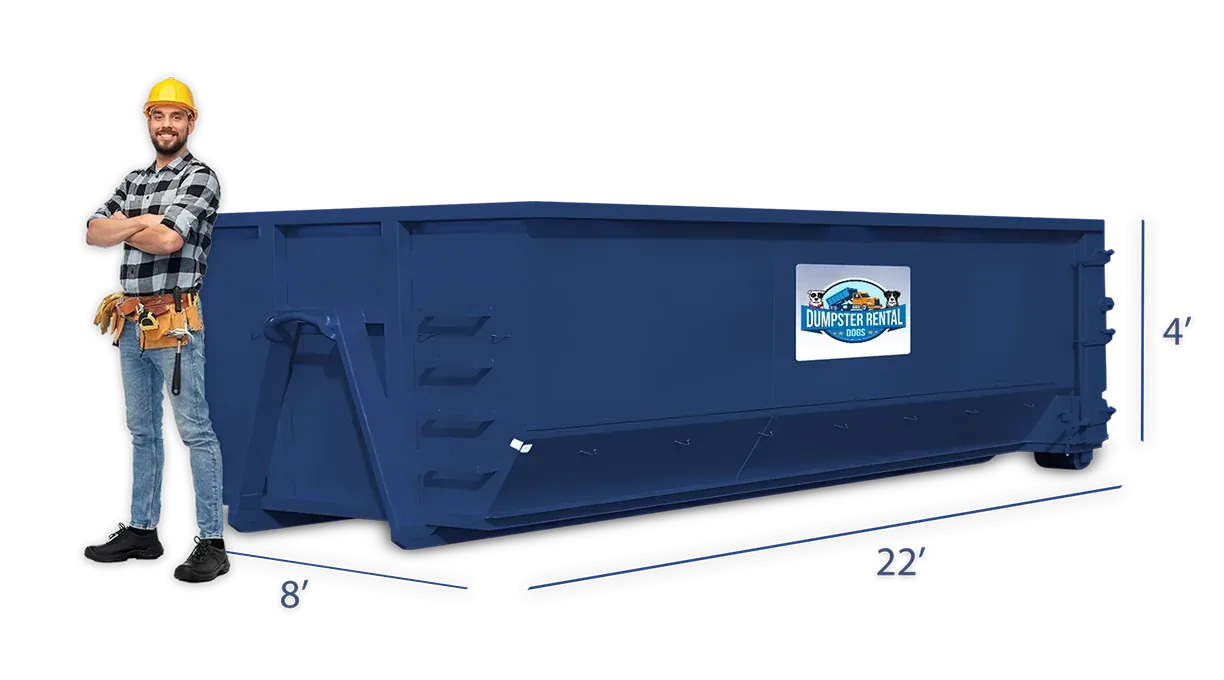
20 yard
A St. Louis 20 yard fits mid-size remodels and cleanouts, and it usually includes about 3 tons.

St. Louis jobs run from roofing tear-offs to home cleanouts, and the 30 yard is the size we price this page around.
From $525* for a 30 yard
*Prices vary with delivery address, container size, debris type, rental length, weight allowance and site access. Ranges shown are typical. Your written quote lists every line item before you approve it.
Quote in 30 seconds · open to 7pm
Pricing
The From price for St. Louis is a Missouri-wide starting rate, not one drawn from St. Louis orders alone. Size ranges below are site-wide, so your written quote may differ.
| Size | Typical* |
|---|---|
| 20 yard | $525 to $695* |
| 30 yard | $525 to $825* |
| 40 yard | $700 to $950* |
*Prices vary with delivery address, container size, debris type, rental length, weight allowance and site access. Ranges shown are typical. Your written quote lists every line item before you approve it.
The From price is for a 30 yard. Other sizes are in the table.
Expect about 3 tons with a 20 yard, 4 with a 30 yard and 5 with a 40 yard, plus 7 days of rental.
Overages come to about $85 per extra ton on a 30 yard* and about $20 per extra day.
Delivery fees here depend on the address, so the charge appears on its own line, apart from the 30 yard rate.
Sizes
St. Louis customers can choose a 20 yard, 30 yard or 40 yard, and the 30 yard is the size our From price is based on.
A St. Louis 20 yard fits mid-size remodels and cleanouts, and it usually includes about 3 tons.
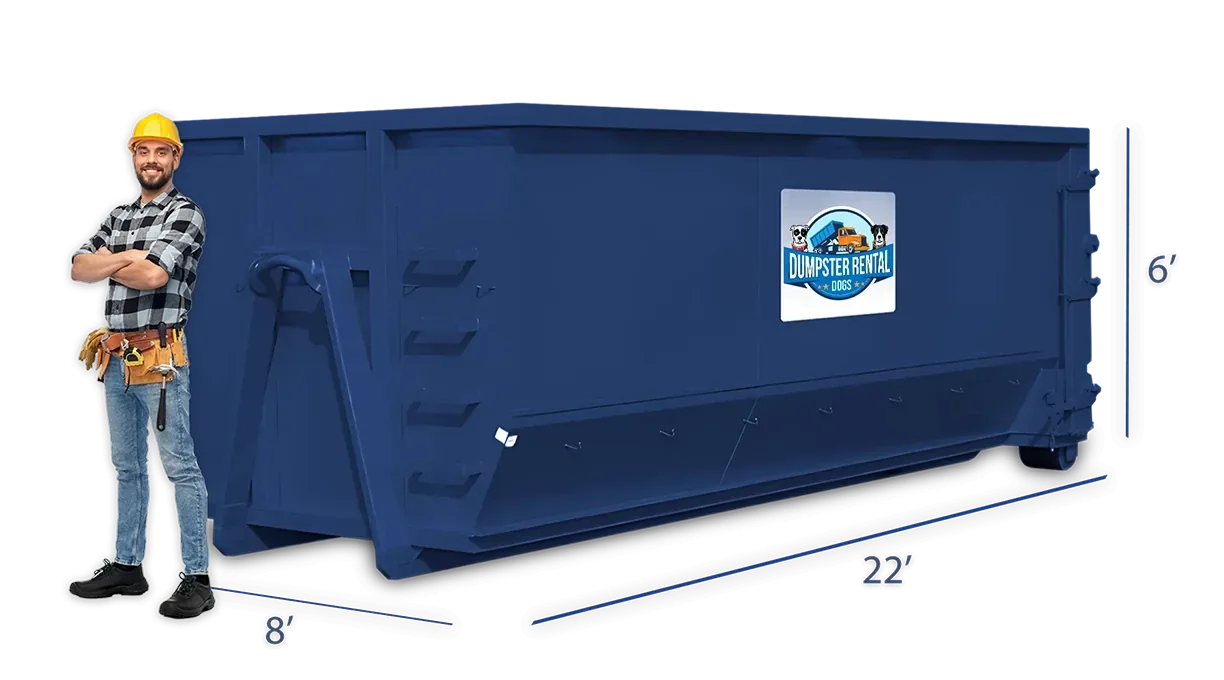
The 30 yard is the St. Louis favorite, used for roofing tear-offs and larger renovations, with about 4 tons usually included.
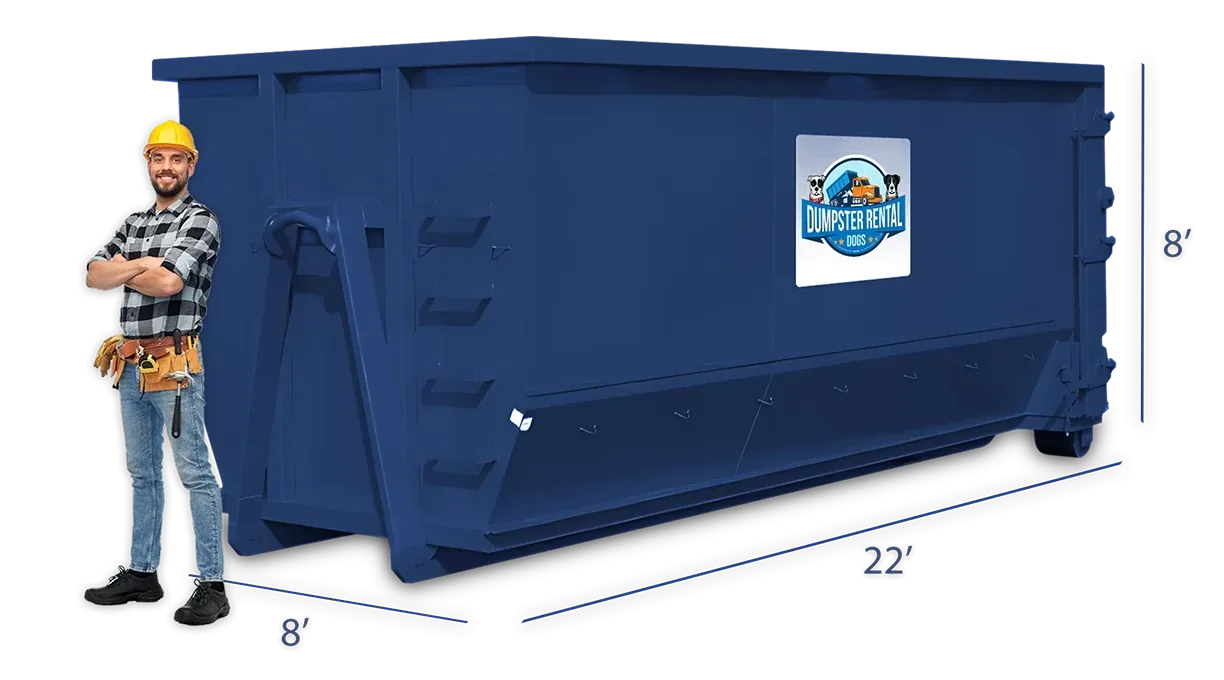
Large St. Louis demolition goes into the 40 yard, which usually includes about 5 tons.
Recent work
Two recent jobs near St. Louis show the range, from a multi-week construction job to a quick household cleanout.
Source: Dumpster Rental Dogs orders by delivery date. Job type comes from the debris material on the order. Customer names withheld.
Weight and disposal
Missouri keeps major appliances, waste oil, lead-acid batteries and yard waste out of landfills, and St. Louis County says a full roll-off cannot take more demolition debris.
| Topic | Rule |
|---|---|
| Items Missouri keeps out of landfills | Missouri law bars major appliances, waste oil and lead-acid batteries from solid waste disposal areas, and bars yard waste except at approved bioreactor landfills. State landfill rules also exclude regulated hazardous waste, radioactive materials, bulk liquids, septic tank pumpings, whole scrap tires and regulated infectious waste. Source 1 Source 2 Source 3 |
| What a demolition landfill takes | A Missouri demolition landfill may take only demolition and construction wastes, brush, wood wastes, cut or shredded tires, inert plastics, soil, rock, concrete, sand, gravel, asphaltic concrete, cinder blocks and bricks, with no more than a minor amount of metal. The state's list of operating demolition landfills includes one in St. Louis County. Source 1 Source 2 |
| Demolition waste in a roll-off or dumpster in St. Louis County | St. Louis County ordinance says demolition and construction waste must be kept in a secure container or otherwise secured against wind, and no one may add waste to a roll-off or dumpster that is full. Contractors and commercial owners generating demolition waste must apply to the county first. Owner-occupied homeowners doing their own work apply without the application fee. Source 1 Source 2 |
Missouri landfills exclude major appliances, waste oil, lead-acid batteries, yard waste, whole scrap tires, bulk liquids and hazardous waste.
Permits and rules
The Department of Streets on Hampton Avenue issues the blocking permit, and applications are made online.
| When | What you need | Lead time | Who to call |
|---|---|---|---|
| A dumpster or storage container that blocks any part of a street, sidewalk or curb lane | A Blocking Right of Way Permit from the Department of Streets, applied for online. Barricades with reflective tape and flashers are required during hours of darkness, and No Parking signs carrying the permit number go up 24 hours before the blocking begins. Source 1 Source 2 | Apply no later than one week before the date needed, or two weeks for large or long requests | City of St. Louis Department of Streets, 1900 Hampton Ave., 314-647-3111, stlstreetdept@stlouis-mo.gov |
| Blocking a sidewalk, curb lane or traffic lane | Blocking hours run Monday through Friday between 9 am and 3 pm. The city will consider extended hours depending on the traffic characteristics of the location. Source | City of St. Louis Department of Streets |
The Department of Streets names dumpster placement as covered by the Blocking Right of Way Permit. Its pages do not address a container kept entirely on private property.
Weather and season
23.8°F
The January low at Lambert Airport averages 23.8°F, and about 85 nights a year reach freezing. The last freeze usually comes near April 2 and the first near November 4.
89.6°F
July highs average 89.6°F, and about 47 days a year reach 90°F or hotter, so a summer cleanout goes easier when loading starts early.
4.82 in
May is the wettest month here at 4.82 inches. Soaked shingles and debris add weight fast, and a driveway or hard pad is the safer spot for the box.
Scheduling
Most boxes reach a St. Louis address about two days after the order, and well under half go out within a day.
Hauling off a full 30 yard and bringing an empty one is priced as its own line*, outside the included days.
Two days is the usual lead time. Call (314) 297-0899 to ask whether a closer truck can run earlier.
Delivery area
City addresses take the most deliveries around here, with St. Peters, Florissant and St. Charles next, then some in Hazelwood and Ballwin. A few reach Barnhart, Webster Groves, Fenton and Arnold.
Placement
St. Louis requires a Blocking Right of Way Permit from the Department of Streets for a dumpster in the street, sidewalk or curb lane, with No Parking signs up 24 hours ahead.
The city's street permit pages cover blocking the public way. They set no rule for a box on a private driveway or lot.
A box that blocks a street, sidewalk or curb lane needs a Blocking Right of Way Permit and reflective barricades after dark. See permits
FAQs
These answers draw on our recent orders around St. Louis, plus the city permit pages and Missouri landfill rules linked above.
Delivery usually takes about two days, and well under half of drops leave within a day of the order.
A box in a street, sidewalk or curb lane needs the Blocking Right of Way Permit, and blocking runs weekdays between 9 am and 3 pm. A box kept wholly on private ground is outside what those city pages cover.
Yes for the street. The Department of Streets issues it, asks for applications at least a week ahead, and wants two weeks for large or long requests.
Rentals typically include 7 days, and finished jobs usually run a little over a week, so tell us early if the project may go long.
Plan on about 3 tons with a 20 yard, 4 tons with a 30 yard and 5 tons with a 40 yard.
Missouri landfill rules exclude major appliances, waste oil, lead-acid batteries, yard waste, whole scrap tires and bulk liquids, so keep those out of the box.
Extra weight runs about $85 per ton on a 30 yard, and each added day runs about $20 on a 30 yard. Net 30 and extended terms are available for qualified contractor and business accounts.
Ask for haul-off once the box is full. Jobs around here usually wrap up in a little over a week.


